The Lodge has all but the first twelve years of their minutes. Many of the founding fathers of Carroll County were members of the Lodge. The minutes contain interesting information about the County and Town throughout the years. One being the rates for electricity, the Carrollton Electric Company in 1904 raised the rates from $1.65 per month to $6.00 per month. Members of Lodge felt this was too high and voted to have the power shut off and returned to using oil lamps. This continued for five years when the Electric Company lowered the rate to $1.50 per month.
The cornerstone for the current Masonic Hall was laid in 1899. The cost of the Hall was $1,483.00. John Sidney McCain (Sen. John McCain’s grandfather) served on the Building Committee.
The Carrollton Post Office was located in the north first floor room from 1899 to 1952. In 1919 the Red Cross was located in one of the first floor rooms and in 1946 the State Board of Health rented part of the first floor for the Carroll County Health Department. In 1952 when the Post Office moved out, the Selective Service Board rented space. Through the years the building has housed various Doctor’s offices and a florist shop.
In 1951 the Hall was renovated and in 2005 the Lodge began and extensive renovation/restoration. Work has been done on the foundation, the exterior has been painted, the roof replaced, and the porch repaired. The Lodge room has been painted and the floors refinished. The entire building has been rewired and plumbed. Two years ago HVAC was installed. Work has begun on the first floor rooms.
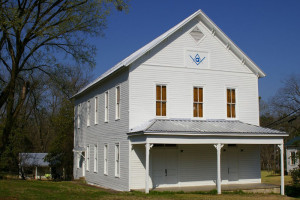
Carrollton Masonic Lodge
Funding for the restoration has come in the form of grants from the Mississippi Department of Archives and History, donations from the general public, and yearly fundraisers. One of which is selling sausage biscuits and coffee each year early in the morning on Pioneer Day during the Carrollton Pilgrimage.
This information has been provided by the Carrollton Masonic Lodge.
]]>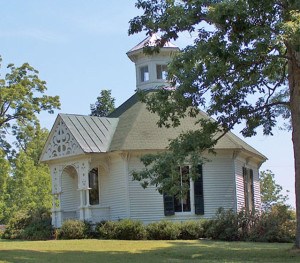
But Cotesworth is more than a destination for historians, architects, and people interested in old homes. Indeed, the stately Greek Revival mansion amid its pastoral setting has caught the eye of Hollywood. In the 2012 movie The Help, nominated for a Best Picture Academy Award, Cotesworth is the home of Celia Foote, played by Jessica Chastain (nominated for an Oscar for this performance), whose maid is Minnie, played by Octavia Spencer (winner of an Oscar for this performance). More recently, James Franco turned Cotesworth into the Compson home in his film adaptation of Faulkner’s The Sound and the Fury.
Owned by George’s great-granddaughter Katharine Williams until its purchase by the Cotesworth Culture and Heritage Center (CCHC), the Cotesworth house has recently undergone partial restoration and renovation, including the installation of central heating and cooling on the first floor, as well as an ADA-compliant restroom. Cotesworth is now available for weddings, parties, meetings, tours, and other events. Furthermore, plans are in place for a complete restoration and renovation of the house and library, including the addition of period-appropriate furnishings and accoutrements. The goal of the CCHC is to make the house, library, and grounds not only a site for special occasions, but also an interactive educational arena.
You will definitely be glad you took the time to visit Cotesworth. You may even decide to schedule an event there yourself, or you may want to donate to the CCHC. If so, call 662-237-9600 for all the information you need for planning your own Cotesworth experience.
Pilgrimage Tickets are $10 and will be available only at Cotesworth.
Written by Josephine Neill-Browning, Cotesworth Culture and Heritage Board
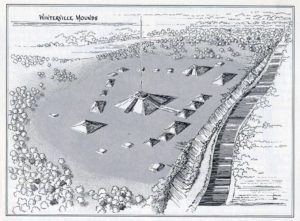
]]>According to the National Park Service website, the Winterville site consists of a 43-acre plaza with flat-topped, rectangular ceremonial mounds of various sizes. The largest mound, at the center, is the 55-foot-high Mound A. Archaeologists believe that the site was occupied mainly during ceremonies with the social elite, such as chiefs, priests, and their retainers, being the permanent residents. Buildings were constructed of wooden posts covered with mud plaster and had thatched roofs. It is likely that only members of. Four of the original 23 mounds were destroyed and several others reduced to remnants by agricultural practices before the site became as a state park. Nevertheless, this mound group remains one of the largest and best-preserved in the southeastern United States. Archaeological excavations were conducted at Winterville in 1967-1968. The finds included structural remains, burials, and many ceramic and stone artifacts. From this evidence, the history of the site was reconstructed. The Winterville museum exhibits a large collection of archeological artifacts, including decorated pottery vessels, stone tools, and ornaments from Winterville and other regional sites.

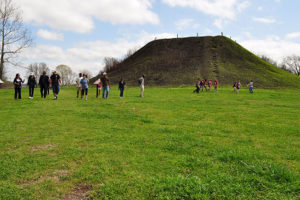
Dr. Mark Howell, Director of Winterville Mounds (administered by the Mississippi Department of Archives and History), will bring the Winterville Traveling Trunk to Carrollton’s Historic Pilgrimages and Pioneer Days on October 8, 2016. On display will be a tri-fold display (3’ x 3’) with pictures of the Winterville archaeological site, artifacts from there and nearby sites; replications of ancient tools and weapons, such as an atlatl (spear thrower) and fire starter; hands-on pottery sherds and lithics (worked stone); replications of high status ceramics; and handouts about the site, public programs, and those from other nearby archaeological sites and attractions—including the newly established Mississippi Mound Trail. Mound Trail t-shirts will be available for sale as well as books on the archaeology of Mississippi. Dr. Howell will answer questions and give demonstrations on the Native American technology on display. Although everyone interested in our first residents is invited to stop by to talk to Dr. Howell, history teachers will find this exhibit especially interesting.
Note: Two sites Carroll County have been identified as Mississippian sites and are registered on the National Register of Historic Places. Both are on private property and are not open to the public.
]]>“Visitors come to Carrollton because of the architecture and stay perhaps, because of a festival or a personal invitation. Getting to know Carrollton takes little money not time. What is re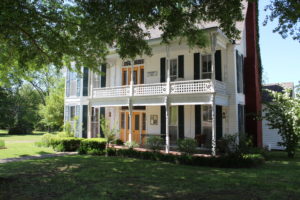 quired is an
innate curiosity and the ability to carry on a spontaneous conversation over a fence or on a porch. As a destination, it’s a place to go with a picnic basket for a quiet afternoon or during the annual pilgrimage when homeowners open their doors to the public and Pioneer Days attracts the crowds.”
“If anything rivals the rich historic residential area, it may be the churches, Courthouse or the remaining commercial properties. At the corner of Washington and Lexington Streets across from the Courthouse, Gee’s Store serves as the quintessential reminder that time can stand still. Looking through the windows takes passersby back 150 years.”
“Located a short drive from Grenada, Winona and Greenwood, Carrollton offers the removed peace of rural living without the cacophony of daily life. ”
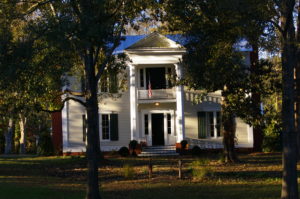 These excerpts are from an article in May 2016 edition of the DeSoto Magazine, written by Karen Ott Mayer. “The Historic Homes of Carrollton” also discusses the Captain Ray House, Wayside and Lum Reek. To learn more about the DeSoto Magazine, go to www.desotomagazine.com.
Carrollton is located at the junction of Mississippi Highways 82, 35, and 17.
The annual Pilgrimage and the Pioneer Day Festival will be held on October 7 and 8. For more information contact us at www.CarrollCountyMs.org, TourCarrolltonMs@gmail.com or 662-237-6910.
]]>In the half-century since the movie was made, not much has changed in Carrollton. Visitors still find its 1878 courthouse sitting on the town square, with exterior doors that are never locked. Church designs range from the Gothic Stick Style jewel that is Grace Episcopal to more formal classical buildings used by the Presbyterian, Methodist and Baptist congregations. The 1870s jail survives, as does an entire block of mid-1800s storefronts on the south side of the square. Merrill’s Store, now a museum, dates back to the town’s 1830s origins. Winding residential roads are lined with antebellum showplaces and Victorian cottages, most in excellent condition and some handed down over multiple generations.
There are many historic towns in Mississippi where you can find the old interspersed with modern life. But only in Carrollton can you find a town that truly seems like it has been preserved in amber for more than a century. It’s well worth the trip.
Mary Carol Miller, author of Written in the Bricks: A Visual and Historical Tour of Fifteen Mississippi Hometowns
]]>